
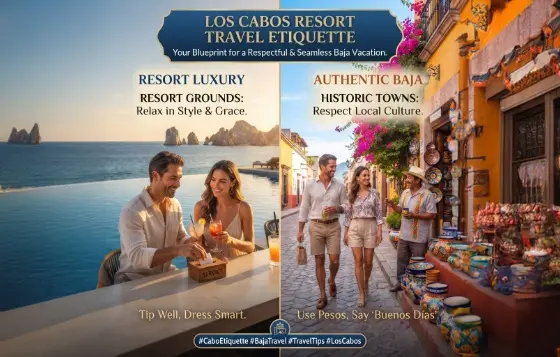
Stepping out of a luxury resort in Los Cabos without understanding local customs can inadvertently disrupt your connection with authentic Baja culture. This guide breaks down everything you need to travel with confidence, grace, and respect.
- Mastering Mexican peso preferences and appropriate tipping benchmarks for private villas and charters.
- Navigating subtle dress code shifts between private resort grounds and historic town centers.
- Applying respectful linguistic habits and sustainable coastal eco-etiquette across marine parks.
Step out of your private transport into the warm Baja California Sur air, and you cross an invisible threshold. Inside Pedregal's cliffside sanctuaries or the Tourist Corridor's sprawling oceanfront estates, luxury rules supreme. Step outside those gates into downtown Cabo San Lucas or San José del Cabo, and the social dynamics shift instantly.
Los Cabos resort travel etiquette encompasses local cultural norms, tipping guidelines for resort staff and private charters, and appropriate dress codes. Practicing respectful Spanish greetings, using Mexican pesos for daily expenses, and honoring coastal eco-regulations ensure a seamless and culturally respectful vacation experience in Baja.
Navigating this dual-world destination requires more than a passport and a credit card. It demands a working knowledge of local financial ecosystems, dress codes, and social customs that bridge international tourism with authentic Baja culture. For a comprehensive overview of regional geography, review the Los Cabos Neighborhood Guide.
Bridge Luxury Resorts and Authentic Baja Culture
Los Cabos operates as a striking study in contrasts. It functions simultaneously as an elite international playground with five-star service standards and as a deeply rooted Mexican community supported by generational families. According to insights from the Baja California Sur Tourism Board, honoring regional traditions preserves the authentic character that draws millions of travelers to the peninsula each year.
Treating resort boundaries as a cultural vacuum invites friction. True travel etiquette here relies on reciprocity: matching the gracious hospitality of local service professionals with cultural awareness, linguistic respect, and environmental mindfulness.
Master the Local Financial Ecosystem: Currency, Cash, and Tipping
Money talks, but how you transact reveals your situational awareness as a traveler. While US dollars are widely accepted in tourist hubs, relying exclusively on greenbacks creates hidden friction for local service workers.
USD vs. Mexican Pesos: Why Local Currency Wins
International credit cards are standard at upscale resorts, but cash remains vital for smaller merchants, taxi drivers, and service staff. Carrying Mexican pesos prevents workers from absorbing unfavorable exchange rates or wasting time at exchange kiosks, as outlined by the Bank of Mexico - Banxico.
- Pro Tip: Withdraw a mix of pesos and low-denomination US bills upon arrival. For everyday tipping and local markets, pesos signal immediate cultural respect.
Restaurant Billing: Spotting Included Service Fees
Dining out in Cabo is a cornerstone of the visitor experience, but billing conventions differ from North American norms. Always check your physical receipt before calculating a tip.
- Check for Propina: Many upscale restaurants automatically include a 10% to 15% service fee (servicio or propina). When this fee is present, add extra only for exceptional service.
- Standard Tipping Range: When no service fee appears on the bill, tip 15% to 20% for good service. Cash left directly on the table is always preferred over credit card additions.
Resort, Villa, and Activity Tipping Benchmarks
High-end hospitality involves extensive behind-the-scenes labor that casual vacationers often overlook. For detailed staffing strategies, consult the Luxury Villa Rental & Concierge Guide.
- Daily Housekeeping: Budget $5 to $10 USD per day for room attendants. Hand this tip directly to housekeeping staff with a polite “gracias” or leave it in a labeled daily envelope.
- Private Villa Support Crews: For luxury villa rentals serviced by a full team, budget a cumulative $50 to $100 USD per day for the collective support crew. Distribute this via the lead villa manager or individual departure envelopes.
- Fishing Charters & Excursion Crews: Deep-sea sportfishing is legendary in Cabo. Deckhands and captains who clean your catch and manage navigation customarily expect 15% to 20% of the total charter value.
Quick Reference: Los Cabos Financial & Tipping Matrix
Service Environment | Recommended Currency | Standard Tipping Benchmark | Key Etiquette Rule |
All-Inclusive Resorts | Pesos / USD | 5–10 USD/day (Housekeeping); 2–5 per bar/dining interaction | Tip individual servers directly rather than pooled bins when possible. |
Private Luxury Villas | Pesos Preferred | 50–100 USD/day total for support crew | Distribute via lead butler or separate envelopes at checkout. |
Upscale Restaurants | Credit Card / Cash | 15%–20% (if not already included) | Audit the bill for pre-added servicio charges. |
Fishing & Boat Charters | Pesos / USD Cash | 15%–20% of charter value | Tip deckhands separately from the captain for exceptional labor. |
Taxis & Private Transfers | Pesos Preferred | Round up to the nearest convenient denomination | Agree on fare rates before entering unmetered taxis. |
Dress Codes: Navigating Resort Grounds vs. Historic Towns
The visual transition from private infinity pools to public colonial streets requires careful consideration of local sensibilities. Guidelines published by the Secretaría de Turismo (SECTUR) emphasize respectful public presentation across historic municipalities.
Resort Grounds vs. Historic Municipalities
Swimwear, boardshorts, and bare chests belong strictly within resort properties and immediate poolside zones. Walking through downtown Cabo San Lucas or strolling the peaceful galleries of San José del Cabo in swimwear projects a disregard for local norms.
- Daytime Exploration: Opt for casual resort wear, lightweight linens, cotton sundresses, or tailored shorts with polo shirts.
- Evening Dining: Upscale restaurants across the Tourist Corridor enforce smart-casual dress codes. Men wear collared shirts and closed-toe shoes or designer sandals, while women opt for evening resort attire. Avoid athletic wear, flip-flops, and beach cover-ups in fine dining venues after dark.
Community Interactions: Language, Markets, and Vendor Respect
Social interactions in Baja California Sur are anchored by foundational politeness. Mastering basic communicative habits transforms a transactional tourist experience into a genuine cultural exchange.
Linguistic Warmth and Baseline Courtesies
Before asking a concierge for directions or hailing a water taxi, initiate every interaction with a warm Spanish greeting. Say “Buenos días” (Good morning), “Buenas tardes” (Good afternoon), or “Buenas noches” (Good evening) before switching to English. Pairing these greetings with “Por favor” and “Gracias” sets an immediate tone of mutual respect.
Market Etiquette and Vendor Respect
Browsing local artisan markets and beachside vendor stalls highlights any Baja itinerary. While friendly price negotiation (regateo) is culturally acceptable in open-air markets, aggressive haggling disrespects local craftspeople. Recognize the immense hand-labor required for authentic Huichol beadwork and pottery. If price negotiations stall, walk away with a smile.
Eco-Etiquette: Preserving Cabo's Marine Parks and Reefs
Los Cabos sits at the dramatic meeting point of the Pacific Ocean and the Sea of Cortez—a marine sanctuary Jacques Cousteau called the aquarium of the world. Field research by the Gulf of California Marine Program shows that protecting this fragile ecosystem is a core requirement of modern travel etiquette. For actionable sustainability steps, explore the Baja Sustainable Tourism Overview.
Protecting Santa Maria, Chileno Bay, and Marine Life
Whether snorkeling at Santa Maria Beach or whale watching in the bay, visitors must adhere strictly to Leave No Trace principles.
- Reef-Safe Sunscreens: Standard chemical sunscreens contain oxybenzone and oxinoxate, which bleach coral reefs. Always apply mineral-based, reef-safe sunscreens containing zinc oxide or titanium dioxide before entering the water.
- Wildlife Distance Regulations: When encountering nesting sea turtles or breaching humpback whales, maintain a respectful physical distance outlined by NOAA Marine Wildlife Viewing Guidelines. Never touch or feed local fauna, and ensure all trash is packed out or recycled properly.
Frequently Asked Questions About Los Cabos Resort Travel Etiquette
Is tipping expected at all-inclusive resorts in Los Cabos?
Yes, tipping service staff at all-inclusive resorts is customary and deeply appreciated. Although food and lodging are prepaid, direct cash tips guarantee immediate compensation for bartenders, pool attendants, and maids.
Should I use US dollars or Mexican pesos in Cabo San Lucas?
Carrying Mexican pesos is strongly recommended over US dollars. Pesos help local workers avoid secondary exchange fees on domestic expenses and ensure you receive fair change when shopping at local markets.
Is it safe to drink the tap water or ice at Los Cabos resorts?
Luxury resorts, boutique hotels, and reputable restaurants in Los Cabos utilize advanced multi-stage reverse osmosis filtration systems, making tap water and ice safe on property. Stick to bottled or purified water when exploring street food stalls outside major tourist complexes.
What is the appropriate dress code outside of resort grounds?
Outside resort properties, beachwear is strictly frowned upon. When visiting downtown plazas, historic districts like San José del Cabo, or local restaurants, travelers should wear smart-casual attire including shirts, trousers or shorts, and closed shoes.
Elevating Your Baja Experience
Adhering to thoughtful travel etiquette in Los Cabos transforms a standard beach vacation into an immersive, culturally enriching journey. By balancing financial generosity with localized currency awareness, respecting town dress codes, and safeguarding marine ecology, visitors ensure their presence honors the local community.
Take the next step in planning your seamless Baja getaway: Download our free printable "Baja Traveler's Quick Etiquette & Packing Checklist" to keep these guidelines handy before you fly.