
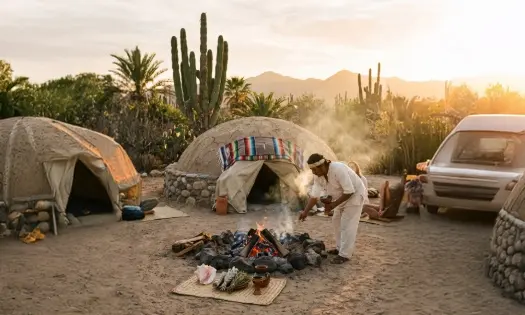
Finding genuine spiritual transformation among the resort corridors of Baja California Sur often feels impossible against the backdrop of infinity pools and commercial spas.
- Mesoamerican Lineage: Why the temazcal is an adopted sacred technology in Baja rather than an indigenous Pericú tradition.
- The Four Doors: How four distinct ceremonial heat cycles systematically strip away mental noise, emotional baggage, and physical tension.
- Desert Ethnobotany: How native Baja plants like wild Damiana and Sierra torote elevate herbal steam medicine.
- Sanctuary Directory & Costs: Transparent price breakdowns comparing rustic community ranchos (60–130) to oceanfront five-star resort spas (280–550+).
- Clinical Safety & Etiquette: Evidence-based cardiovascular benefits, contraindications, and essential 24-hour hydration protocols.
What is an authentic temazcal ritual in Los Cabos?
An authentic temazcal ritual in Los Cabos is an ancestral Mesoamerican sweat lodge ceremony guided by an initiated temazcalero. Held inside an earthen dome representing Earth's womb, participants experience four heat cycles using glowing volcanic stones, native desert botanicals, prayer, and steam for deep physical and spiritual rebirth.
What Is an Authentic Temazcal? (Origins, Symbolism & Architecture)
The term temazcal originates from the Nahuatl word temazcalli, fusing temas (steam) and calli (house). Pre-Columbian civilizations—including the Mexica, Toltec, Zapotec, and Maya—constructed these domed sanctuaries for postpartum recovery, warrior convalescence, and spiritual purification. Historical excavations documented by the National Institute of Anthropology and History (INAH) reveal masonry sweat lodges functioning across Mesoamerica for over two millennia.
Architecturally, the dome represents the sacred womb of Tonantzin (Mother Earth). Participants crawl inside on hands and knees, discarding shoes, wristwatches, and social standing in the dirt outside. Sensory deprivation takes over immediately. In total blackness, external identity falls away, returning you to an introspective state before birth.
[Sacred Exterior Hearth (Tletl)]
│
Heated basalt rocks (Las Abuelitas)
│
▼
[Low Entrance (Kneeling Entry)]
│
▼
╔═════════════════════════════╗
║ THE TEMAZCAL DOME ║
║ (Womb of Mother Earth) ║
║ ║
║ [Ombligo] ║
║ (Central Fire Pit) ║
║ ║
║ 4 Quadrants / 4 Doors: ║
║ East • South • West • North║
╚═════════════════════════════╝
Mesoamerican Roots vs. Baja Historical Context
Cultural clarity separates authentic spiritual engagement from commercial packaging. The indigenous nomadic hunter-gatherers of southern Baja California Sur—the Pericú and Guaycura—did not construct Mesoamerican stone sweat lodges. Instead, they favored thermal mineral springs along the Sierra de la Laguna hiking trails, open-air smoke smudges, and direct ocean baths.
Modern sweat lodges across Los Cabos stem from mainland lineages—primarily the Mexica-Tolteca traditions and the international Camino Rojo. Initiated practitioners (temazcaleros) migrated west, carrying ancestral lodge-building methods to the Baja desert. Today, they weave classic Nahua ritual structure together with native desert botanicals.
The Sacred Anatomy: The Dome, the Hearth, and "Las Abuelitas"
Every physical component of a traditional temazcal serves an exact therapeutic and ritual purpose:
- The Dome (Vientre): Workers build the structure using mortared river stone, sun-baked adobe bricks, or bent branches of desert torote and palo blanco. Layered canvas and wool blankets seal the dome, trapping thick steam and blocking all daylight.
- The Central Pit (El Ombligo): A shallow floor depression serves as the energetic navel connecting the dome to the earth.
- The Outdoor Hearth (Tletl): A stone fire pit aligned with the lodge doorway, where hardwood burns for hours before guests arrive.
- The Volcanic Basalt Stones (Las Abuelitas): The fire keeper heats porous volcanic stones ("the Grandmothers") until they glow red. Basalt lacks trapped internal moisture pockets, which prevents explosive shattering when quenched by cold herbal infusions.
Inside the Ceremony: Navigating the Four Doors (Las Cuatro Puertas)
A complete ceremony runs through four structured stages known as the four doors (las cuatro puertas). Each door invokes a cardinal direction, a natural element, and a stage of life. Between cycles, the fire tender lifts the canvas door flap to vent spent steam and receive fresh glowing stones.
Door 1: The East (Tlahuiztlampa) – Fire and Intention
The journey begins outside with a smoke cleanse (limpia) using wild desert copal resin. The temazcalero sounds a sea conch (atecocolli) toward the four horizons, inviting participants to crawl clockwise into the pitch-black chamber.
The fire tender (aguador) carries in the first stones using deer antlers or pitchforks. Copal resin sprinkled over the red rocks releases sharp pine-citrus incense into the air. When the first splash of herbal water hits the stones, radiant steam (el vapor sagrado) envelops the circle. Steady beats from a water drum (huehuetl) guide the opening songs as participants articulate their personal intentions.
Door 2: The South (Huitztlampa) – Water and Emotional Release
The door flap opens briefly, flooding the lodge with fresh desert air before a second wave of stones enters. The heat deepens.
Governed by Water, this cycle targets emotional blockages, repressed childhood wounds, and relationship patterns. The guide ladles rich herbal infusions across the glowing rocks, building thick humidity. Communal singing shifts from formal chants to raw emotional expression as sweat and tears mix freely in the dark.
Door 3: The West (Cihuatlampa) – Earth and Physical Surrender
The third door delivers maximum thermal intensity. Fresh stones push interior temperatures toward 50°C (122°F) under saturated humidity.
Representing Earth and the setting sun, this stage demands total physical surrender. Sitting upright strains the lungs, leading participants to press their chests against the cool dirt floor. In this low zone, you breathe the dense, cooler boundary layer of earth air while old fears, physical tensions, and psychological resistance burn away.
Door 4: The North (Mictlampa) – Air and Spiritual Rebirth
The final round honors the North, representing Air, ancestral memory, and mental clarity. Thermal intensity softens into dry, gentle warmth.
Songs of gratitude replace cathartic chants, allowing participants to vocalize commitments to their loved ones and personal paths. When the door flap lifts permanently, daylight rushes into the dome. Participants crawl out backward onto the earth, mirroring an infant leaving the birth canal. Desert breezes cool the skin instantly, inducing profound emotional lightness and mental quiet.
Baja’s Desert Ethnobotany: Regional Plants in the Sacred Steam
While mainland ceremonies favor eucalyptus and garden rosemary, an authentic Los Cabos temazcal integrates native flora documented in Sonoran and Baja desert ethnobotanical records.
BAJA CEREMONIAL DESERT BOTANICALS
│
┌───────────────────┼───────────────────┐
▼ ▼ ▼
[WILD DAMIANA] [DESERT TOROTE] [WHITE SAGE]
Turnera diffusa Bursera microphylla Salvia apiana
Soothes nerves & Disinfects air & Clears airways &
opens airways grounds energy releases tension
- Wild Baja Damiana (Turnera diffusa): The undisputed botanical star of Baja California Sur. Simmered into the primary medicine water, vaporized Damiana releases aromatic terpenes that soothe nervous tension and stabilize blood pressure during high-heat cycles.
- Torote (Bursera microphylla / Elephant Tree): Healers harvest golden resin weeping from wild torote trees in the foothills. Thrown onto white-hot basalt, it releases a sharp balsamic vapor that clears bronchial passages and purifies the air.
- Desert White Sage (Salvia apiana): Bundled sage dipped in herbal water acts as a ceremonial sprinkler (aspergillum). Flicked across shoulders and backs, it relaxes tight muscles and releases antimicrobial oils.
- Wild Rosemary (Romero): Grown in local organic farm corridors, fresh rosemary stimulates peripheral blood flow and anchors sensory focus throughout the ceremony.
Where to Book an Authentic Temazcal in Los Cabos: Vetted Directory
Travelers can choose between two distinct ceremony models: independent community sanctuaries and integrated luxury resort spas.
Community Sanctuaries & Off-Grid Ranchos
- Casa Maya Temazcal y Terapias (San José del Cabo): Located in semi-rural Colonia Vista Hermosa, Casa Maya operates under rigorous Mexica lineage standards. Public ceremonies coincide with lunar cycles, offering deep communal energy without commercial spa polish.
- Pachamama Mexico (Todos Santos): Positioned an hour north of Cabo San Lucas, this coastal sanctuary pairs an adobe sweat lodge with ocean vistas. Consider pairing this ceremony with a broader Todos Santos day trip guide exploring regional artisan culture.
- Sierra Foothills Ranchos (Miraflores & Santiago): Multi-generational family ranchos in the foothills deliver raw wilderness immersion. Ceremonies use pure granite mountain spring water and finish with farm-style meals prepared over mesquite wood.
Integrated Five-Star Resort Spas
- The Temazcal at One&Only Palmilla (San José Corridor): The premier luxury baseline across Mexico. A resident master healer directs a private two-hour ritual in an outdoor stone lodge, supported by cold immersion plunge baths and five-star amenities.
- Jasha Spa at JW Marriott Los Cabos (Puerto Los Cabos): Jasha Spa features a purpose-built masonry dome framed by an outdoor botanical garden. The ritual follows traditional protocol while granting full access to the property's vitality pools.
- Milagro Spa at Hacienda Encantada (Cabo San Lucas): Perched along coastal cliffs near Land’s End, this facility offers a 90-minute ceremonial sweat lodge. Guests experience classic steam rounds paired with expansive views of the Pacific Ocean and Sea of Cortez.
Temazcal Costs & Logistics: Luxury Spas vs. Rustic Ranchos
Ceremonial costs mirror the venue setting, privacy level, and accompanying facilities:
Setting Category | Average Cost (USD) | Group Size | Duration | Included Amenities | Ideal Visitor Profile |
Community Sanctuaries (e.g., Casa Maya) | $60 – $130 per person | 8 – 20 participants | 3.0 – 4.0 hours | Well-water bucket rinse, hot herbal tea, shared fresh fruit | Cultural purists, solo seekers, budget travelers |
Private Mountain Ranchos (Sierra Foothills) | $200 – $350 (flat rate) | 2 – 6 participants | 4.0 – 5.5 hours | Spring-fed pool swim, ranchero meal, round-trip transport | Adventurers, families, off-grid retreat travelers |
Boutique Eco-Lodges (Todos Santos) | $120 – $220 per person | 6 – 12 participants | 2.5 – 3.5 hours | Sound healing sessions, shaded hammocks, fresh juices | Yogis, wellness travelers, couples |
5-Star Luxury Spas (Palmilla, JW) | $280 – $550+ per person | 2 – 8 (or private) | 90 – 120 minutes | Full hydrotherapy, plush robes, cold plunges, bilingual shaman | Travelers seeking privacy and five-star amenities |
Clinical Physiology & Safety: What Modern Science Confirms
Beyond metaphysical symbolism, the temazcal triggers significant, measurable physiological adaptations through controlled whole-body hyperthermia.
Measurable Health Benefits (Hyperthermia & HSP70)
Peer-reviewed clinical hyperthermia studies demonstrate that sustained heat exposure between 42°C and 50°C activates Heat-Shock Protein 70 (HSP70). Documented in heat-shock protein mechanisms, these molecules repair misfolded intracellular proteins, blunt systemic inflammation, and speed muscular regeneration.
Peripheral blood vessels dilate as core body temperatures climb 1.5°C to 2°C. Heart rates elevate to 110–140 beats per minute, mimicking moderate aerobic conditioning without skeletal joint load. Saturated steam prevents evaporative cooling, prompting sweat glands to expel 1.0 to 1.5 liters of fluid alongside metabolic wastes. Controlled breathwork concurrently releases beta-endorphins, generating a post-sweat state of peaceful mental clarity.
Strict Contraindications & High-Risk Profiles
The thermodynamic load of a sweat lodge is physically demanding. You must abstain from the temazcal if you present any of the following health conditions:
- Cardiovascular Disease & Hypertension: Swift vasodilation can cause sudden arterial blood pressure drops, inducing fainting.
- Pregnancy: Elevated core body temperatures above 38.9°C (102°F) present serious teratogenic risks to the fetus.
- Epilepsy & Seizure Disorders: Sensory sensory deprivation combined with rapid heat shifts can lower seizure thresholds.
- Active Intoxication or Severe Hangovers: Dehydration from alcohol accelerates dangerous heat exhaustion and heart arrhythmias.
- Open Skin Wounds or Respiratory Infections: Enclosed humidity aggravates broken tissue and accelerates pathogen transmission.
Managing Claustrophobia in Pitch Darkness
Total darkness can trigger anxiety if you battle the enclosed environment. Experienced practitioners use three physical techniques to restore composure:
- Breathe Exclusively Through Your Nose: Nasal breathing naturally cools, humidifies, and filters scorching air before it touches bronchial linings.
- Drop Down to the Earth Floor: Thermal physics dictates that hot air rises. While ceiling air hovers near 50°C (122°F), the dirt floor stays around 26°C (79°F). Pressing your hands or forehead into the soil cools your system immediately.
- Signal for an Exit Between Doors: You are never a prisoner in the lodge. If panic persists, speak the words "Pido salir" ("I ask to leave"). The fire keeper will lift the door flap and guide you out safely into the air.
User Guide & Etiquette: How to Prepare for Your Sweat Lodge
Thoughtful preparation guarantees a safe, rewarding experience in Baja's dry desert climate.
24-HOUR TEMAZCAL READINESS TIMELINE
│
T-24 Hours ─── Drink 3+ liters of water with electrolytes;
eliminate all alcohol consumption.
│
T-4 Hours ─── Eat a light meal (fresh fruit, grains);
avoid heavy animal proteins and dairy.
│
T-1 Hour ─── Remove all metal jewelry, watches, and contact
lenses; dress in pure cotton sarongs or shorts.
│
Post-Sweat ─── Cool down gradually; wrap in dry blankets;
nourish with fresh fruit and warm herbal tea.
24-Hour Pre-Ceremony Hydration & Diet Protocol
- Hydrate Constantly: Los Cabos ocean breezes mask dehydration. Drink 3 liters of spring water enriched with electrolytes or coconut water over the 24 hours preceding your session.
- Eat Clean, Light Meals: Consume fresh fruit and complex carbohydrates 3 to 4 hours before entering. Avoid heavy dairy, red meat, and fried foods. Consider refueling afterward at local Los Cabos farm-to-table dining spots that focus on clean ingredients.
- Abstain from Alcohol: Avoid alcohol for at least 24 hours prior. Intoxication disrupts vascular regulation and impairs mental presence.
Dress Code Etiquette & What to Pack
- Wear Breathable Cotton: Women should wear a cotton sarong (pareo), modest swimsuit, or loose cotton dress. Men should wear simple board shorts or cotton trunks. Natural fibers breathe far better than synthetics.
- Remove All Metal Jewelry: Rings, necklaces, and metal watches absorb radiant heat quickly, causing painful thermal skin burns.
- Leave Contact Lenses Behind: Smoky herbal steam dries ocular film and traps soot. Wear eyeglasses to the sanctuary and store them in your bag outside.
- Power Down Devices: Switch off smartphones to maintain sacred space and preserve group focus.
Post-Ceremony Integration & Recovery
- Cool Down Naturally: Avoid jumping straight into cold plunge pools or turning on air conditioning immediately upon exiting. Allow the desert breeze to stabilize your body temperature gradually.
- Wrap Up in Dry Cotton: Shivering often occurs 20 minutes post-sweat as skin capillaries constrict. Wrap yourself in a clean, dry blanket.
- Replenish Electrolytes: Drink warm damiana or ginger tea. Snack on fresh watermelon, papaya, and oranges to restore potassium and cellular glycogen.
- Rest Early: Avoid nightlife and loud venues immediately after your sweat. Enjoy an early evening; your body will likely slip into an exceptionally restorative REM sleep cycle.
Frequently Asked Questions About Temazcal in Los Cabos
Is complete nudity required during a traditional temazcal ceremony?
No. Modesty and mutual respect define authentic Mexican sweat lodges. Participants wear lightweight cotton sarongs, shorts, or simple swimsuits to encourage natural airflow. Complete nudity remains strictly confined to private clinical therapies or closed indigenous ceremonies.
How hot does the inside of a temazcal get?
Interior temperatures generally hover between 40°C and 50°C (104°F to 122°F). However, saturated steam drives relative humidity toward 100%, creating an intense thermal sensation far exceeding a dry Finnish sauna. The coolest air remains concentrated six inches above the dirt floor.
Can you leave a temazcal ceremony if you panic or overheat?
Yes. Traditional temazcaleros prioritize participant safety over endurance tests. If you feel lightheaded, speak the phrase "Pido salir" between doors. The fire tender immediately opens the canvas flap and safely escorts you into the desert breeze without judgment.
When is the best time of day or year to do a temazcal in Cabo?
The prime season runs from October through May when temperate desert evenings cool the Baja peninsula. During hot summer months, schedule sunset or night ceremonies. Evening sessions let ambient coastal breezes assist your post-sweat cooling and recovery.
An authentic temazcal delivers far more than a recreational spa afternoon—it offers a grounded encounter with living Mesoamerican medicine. By respecting the ancient traditions of stone, steam, and desert botanicals, you emerge from the dome clear-headed, renewed, and deeply connected to Baja's wild landscape.
Interested in planning a restorative journey across the peninsula? Explore our curated guides to wellness retreats in Baja California Sur and the best luxury resort spas in Los Cabos to reserve your private ceremony.