
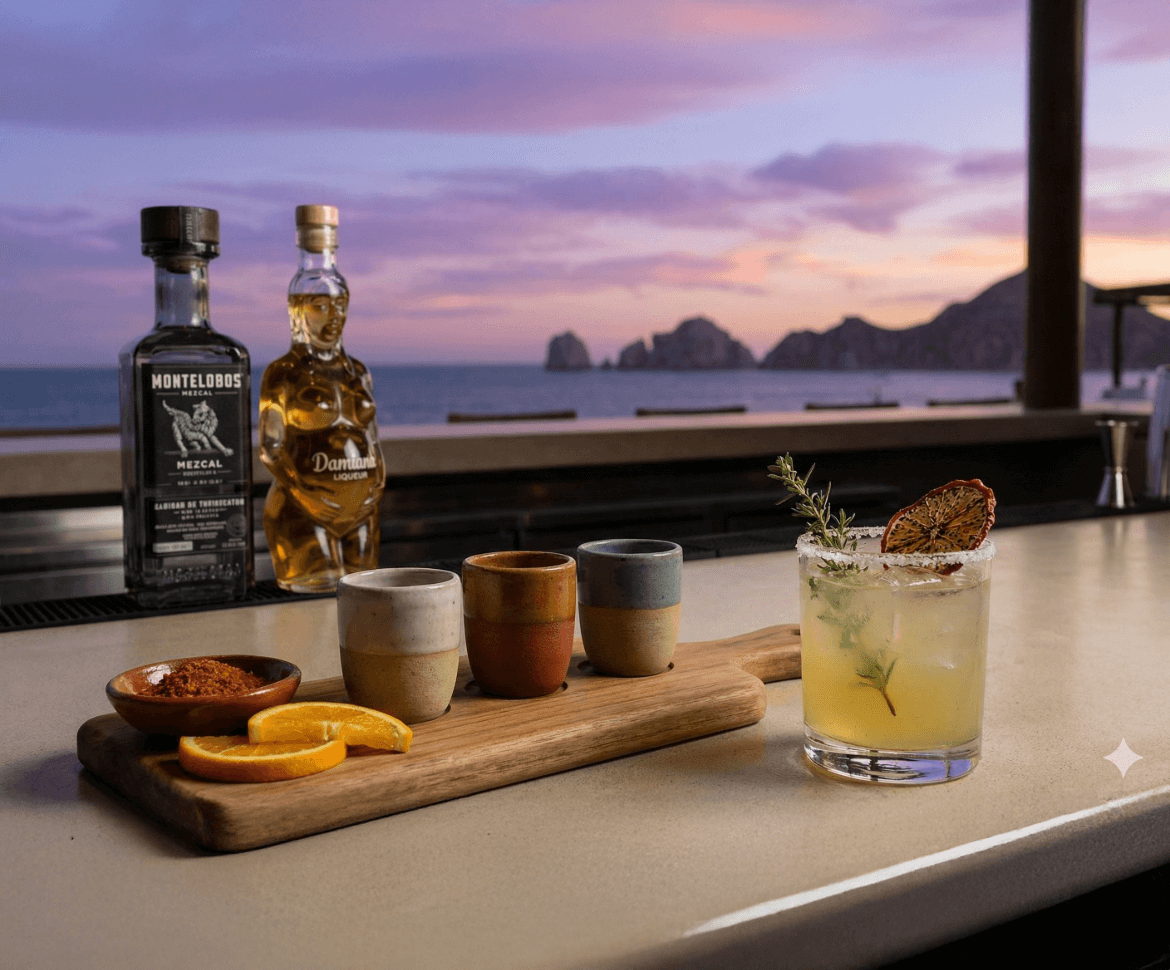
As the sun dips behind the iconic Land’s End arch, the Baja sky erupts in shades of violet and burnt orange. While the Pacific breeze cools the desert air, a sophisticated liquid revolution stirs in the glassware of Los Cabos.
For decades, travelers associated this region with sugary, frozen "well" margaritas. However, in 2026, Los Cabos has matured into a global epicenter for Mexican spirits. Here, ancient indigenous traditions meet modern, sustainable mixology. From the earthy depth of artisanal Mezcal to the herbal secrets of Damiana, the flavors of Cabo now represent a deep respect for terroir and transparency.
1. The Agave Evolution: Why "Additive-Free" Dominates 2026
The modern traveler now demands purity. In response, Los Cabos cocktail culture has pivoted toward additive-free tequila—spirits crafted using only agave, water, and natural yeast.
The Pure Agave Spectrum
High-end tasting rooms in San José del Cabo now emphasize the natural profile of the Blue Weber Agave. By avoiding common additives like glycerin or oak extracts, producers allow the "soil" to speak through the glass.
- Blanco (Plata): The most transparent expression, offering notes of citrus, black pepper, and wet earth.
- Reposado: Aged in oak for 2–12 months, this variety introduces hints of vanilla and honey without masking the agave.
- Añejo: For those who prefer complex layers of tobacco and dried fruit, these are often sipped neat like a fine cognac.
Explore our Ultimate Guide to Cabo Luxury Resorts to find on-site tasting rooms specializing in rare vintages.
2. The Mezcal Movement: Embracing the "Smoky Sister"
If Tequila is Mexico's polished celebrity, Mezcal is its mysterious poet. Unlike Tequila, which is restricted to a single agave species, Mezcal utilizes over 30 varieties, many of which grow wild in the rugged Mexican highlands.
How to Sip Mezcal Like a Local
Experienced drinkers in Baja don't "shoot" Mezcal; they "kiss" it. Because artisanal Mezcal often carries a higher proof (45% to 50% ABV), taking small sips allows your palate to adapt to the smoke.
The Essential Pairing Ritual:
- Orange Slices: Used to highlight bright citrus notes.
- Sal de Gusano: A savory blend of ground agave larvae and chili that provides an umami counterpoint. Learn more about the history of Agave larvae in Mexican cuisine.
- Artisanal Chocolate: High-cacao chocolate emphasizes the creamy, roasted notes of the Espadín agave.
Check out our Top 10 Things to Do in San Jose del Cabo for a list of the city's best hidden mezcalerias.
3. The Legend of Damiana: Cabo’s Botanical Secret
You cannot truly understand the flavors of Los Cabos without experiencing Damiana. This woody shrub (Turnera diffusa) thrives in the Baja desert and has served as a natural tonic for centuries.
The "Original" Margarita Myth
Local folklore suggests that the very first Margarita in Baja utilized Damiana Liqueur instead of orange-based spirits.
- The Flavor Profile: Herbal, woody, and lightly sweet with a cooling mint finish.
- The Iconography: The liqueur traditionally comes in a bottle shaped like a pregnant woman, honoring the Incan goddess of fertility.
Consult the Official Mexican Spirits Council for more on the regulation of regional botanical liqueurs.
4. Desert-to-Glass: Modern Mixology Trends
In 2026, the "Farm-to-Table" movement has evolved into Desert-to-Glass. Elite mixologists are now foraging for hyper-local ingredients that reflect the Baja ecosystem.
- Pitahaya (Dragon Fruit): This cactus fruit provides a stunning neon-pink hue and delicate sweetness.
- Hoja Santa: An aromatic herb with notes of anise, often used to wrap mezcal-based drinks for an earthy aroma.
- Baja Sea Salt: Harvested from local salt flats, it is used within cocktails to heighten citrus acidity.
- Zero-Proof Botanical Spirits: As seen in Vogue’s Travel Trends, high-end mocktails are a staple for the wellness-focused Cabo traveler.
Planning a trip? Review our Cabo Travel Checklist for advice on local currency and seasonal weather.
5. Where to Sip: Curated Tasting Experiences
For an authentic journey, visit these venues recognized by the Michelin Guide and local experts:
|
Venue |
Spirit Focus |
Unique Feature |
|
Agave Study |
Ancestral Mezcal |
Located at Waldorf Astoria Pedregal. |
|
Acre Resort |
Sustainable Spirits |
Features spirits from their own Award-Winning Mezcal Label. |
|
Pancho’s |
Tequila History |
Home to over 500 labels and a dedicated "Tequila Master." |
|
Mezcal Bar |
Regional Diversity |
Located at Montage Los Cabos. |
6. Sustainable Sips: Drinking with a Conscience
Environmental responsibility is the defining flavor of 2026. As agave popularity skyrockets, sustainability has become a necessity.
The "Bat-Friendly" Initiative
By choosing brands certified by the Bat Friendly Project, you support producers who allow agave plants to flower. This preserves the bat population and ensures the genetic diversity of the agave species.
Water & Waste Management
Leading distilleries now implement closed-loop water systems and repurpose agave fibers into building materials. Support these efforts by checking our Eco-Friendly Travel Guide to Mexico.
FAQ: The Los Cabos Spirits Guide
What is the difference between Tequila and Mezcal?
While all Tequila is technically a Mezcal, Tequila must be made specifically from the Blue Weber Agave in designated regions like Jalisco. Mezcal can be made from over 30 agave species and is typically roasted in underground pits, which creates its signature smoky profile. For a deeper dive, visit the Tequila Regulatory Council (CRT).
Is the ice safe in Los Cabos cocktails?
Absolutely. All high-end resorts and reputable bars in Los Cabos utilize purified water systems for their ice and food preparation.
Why is Damiana so popular in Baja?
Damiana is a native desert plant. Beyond its unique herbal flavor, the indigenous Pericú people historically used it for its purported medicinal and aphrodisiac properties.
How can I identify an additive-free tequila?
Look for the "Additive-Free" certification on the label or consult databases like Tequila Matchmaker, which independently verifies production methods.
A Toast to the Soul of Baja
The flavors of Los Cabos represent a vibrant bridge between ancient tradition and modern innovation. Whether you are sipping a wild-harvested Mezcal neat or enjoying a Damiana-infused Margarita, you are participating in a rich cultural heritage.
Are you ready to discover the liquid soul of Mexico?
Don't settle for the standard "well" drink. Visit our Cabo Dining Recommendations and book a guided tasting tour today to experience the true spirit of Baja.