
Where Desert Meets Sea: Exploring Los Cabos’ Unique Ecosystem
- by Raymundo Curiel
-
in 🍹 Lifestyle & Culture
-
Hits: 26
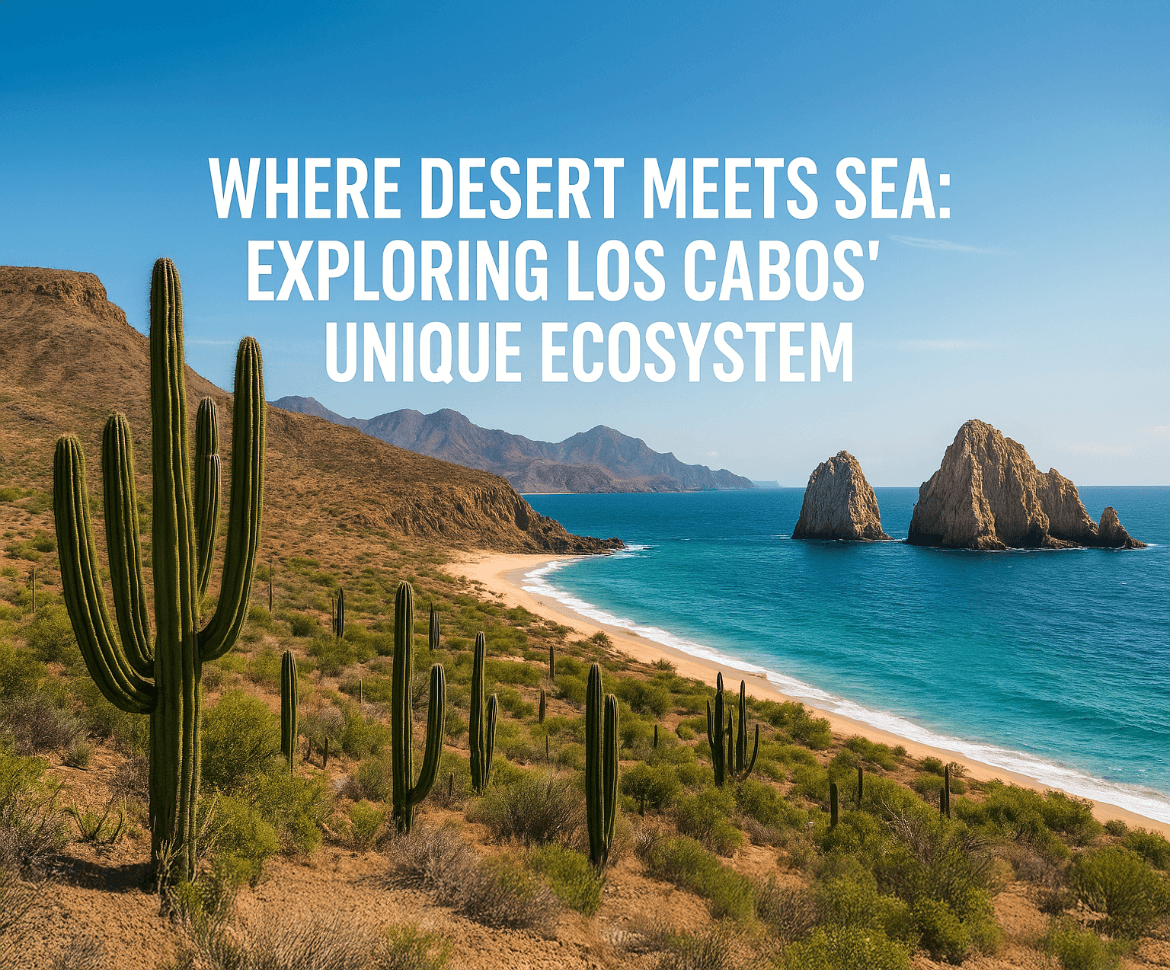
Discover the natural wonders that make Los Cabos one of the most biodiverse regions on Earth.
A Rare Meeting of Worlds
Los Cabos is one of the few places on Earth where two contrasting ecosystems collide—an arid desert and a vibrant marine world. Situated at the southern tip of the Baja California Peninsula, this region is far more than luxury resorts and pristine beaches. It’s a living evolutionary laboratory, home to endemic species, dramatic landscapes, and one of the most biologically rich seas on the planet: the Gulf of California, also known as the Mar de Cortés.
This guide explores what makes Los Cabos’ ecosystem unlike any other, why it’s vital to global biodiversity, and how travelers can experience its wonders responsibly.
Los Cabos Geography: Where Desert, Mountain, and Sea Converge
Los Cabos sits at a geological and ecological crossroads. Millions of years of tectonic activity raised massive granite formations, creating the rugged cliffs and mountains that now define the region. This peninsula separates the Pacific Ocean from the Sea of Cortez, generating powerful weather contrasts and diverse habitats.
Why Geography Shapes Biodiversity
This unique setting creates:
- * Diverse geological formations
- * Microclimates influenced by elevation and coastal winds
- * Interconnected habitats supporting desert and marine species
From sandy dunes and rocky cliffs to freshwater streams and mountain forests, Los Cabos is a mosaic of ecosystems that makes it a global biodiversity hotspot.
The Desert Ecosystem: Life Designed for Survival
Iconic Flora Adapted to Extremes
Despite intense heat, minimal rainfall, and nutrient-poor soils, the Baja desert flourishes with extraordinary plant species, many found nowhere else. Key examples include:
- * Cardón cactus—the tallest cactus on Earth
- * Torote “elephant” trees with swollen trunks
- * Cholla and prickly pear cacti
- * Agave and yucca species
- * Palo Verde trees that photosynthesize through their green bark
These plants survive through water storage, waxy coatings, and rapid blooming after rainfall.
Wildlife of the Baja Desert
The harsh desert hosts an impressive variety of animals, many of them nocturnal to escape daytime heat:
- * Coyotes and gray foxes
- * Desert iguanas and spiny lizards
- * Hawks, owls, and roadrunners
- * Rattlesnakes and other reptiles
These species demonstrate remarkable resilience in one of the driest regions in North America.
Sierra La Laguna Biosphere Reserve: A Mountain Oasis
Rising nearly 7,000 feet above sea level, Sierra La Laguna feels like a completely different world. This UNESCO Biosphere Reserve features pine-oak forests, freshwater springs, and cooler climates that contrast sharply with the surrounding desert.
Why Sierra La Laguna Is Ecologically Important
- * It contains ecosystems rarely found in Baja.
- * It acts as the main freshwater source for Los Cabos.
- * It hosts thousands of species, including several endemic plants and birds.
Hiking here is like walking through several ecosystems in a single day—an extraordinary example of how geography shapes life.
The Marine Ecosystem: The Aquarium of the World
The waters surrounding Los Cabos are even more remarkable than its landscapes. The Sea of Cortez is one of the most biodiverse marine environments on the planet—a fact that inspired Jacques Cousteau to call it “The Aquarium of the World.”
Marine Diversity of the Gulf of California
Thanks to nutrient-rich currents, the region supports:
- * 900+ fish species
- * 5 sea turtle species
- * 3 dolphin species
- * Whale sharks
- * Giant manta rays
- * Migrating humpback and gray whales
The convergence of warm and cold waters creates a dynamic environment where marine life thrives.
A Critical Migration Corridor
Each year, humpback whales travel from Alaska to the calm waters near Los Cabos to mate and give birth. Responsible whale-watching tours give visitors the chance to witness spectacular breaches and tail slaps up close.
Cabo Pulmo: A Global Marine Conservation Success
No ecosystem in the region is more celebrated than Cabo Pulmo National Park, home to the oldest coral reef in the eastern Pacific.
A Reef 25,000 Years in the Making
- * UNESCO World Heritage Site
- * One of the few coral reefs in the eastern Pacific
- * A sanctuary for sharks, rays, and reef fish
A Remarkable Conservation Story
After decades of overfishing, the reef nearly collapsed. In 1995, the community united to create a no-fishing zone. Over time:
- * Fish biomass increased by over 400%
- * Coral health dramatically improved
- *Apex predators returned
- * Ecotourism replaced unsustainable practices
Today, Cabo Pulmo is a global model for marine restoration.
Wildlife Encounters in Los Cabos
Both on land and underwater, Los Cabos offers unforgettable wildlife experiences.
On Land
- * Cardón cactus forests
- * Desert foxes and coyotes
- * Roadrunners and quails
- * Rare reptile species
In the Sea
- * Sea lions sunning on rock formations
- * Whale sharks feeding on plankton
- * Manta rays gliding gracefully
- * Colorful fish in Cabo Pulmo
- * Humpback whales performing acrobatics
Each season brings unique opportunities for wildlife viewing.
Environmental Threats Facing Los Cabos
Despite its natural abundance, Los Cabos faces significant environmental challenges intensified by climate change and rapid development.
1. Rising Sea Temperatures
- * Coral bleaching
- * Fish population declines
- * Disrupted whale migration
- * Growth in invasive species
A UABCS study found a 40% decline in fish diversity in high-impact areas.
2. Coastal Development
- * Loss of critical habitats
- * Sand erosion
- * Marine pollution
- * Light pollution affecting sea turtles
3. Water Scarcity
The desert ecosystem offers limited freshwater. Tourism growth and population expansion increase pressure on the region’s aquifers.
4. Plastic and Marine Pollution
Microplastics threaten fish, turtles, and marine mammals throughout the region.
Conservation Efforts: Protecting the Desert–Sea Balance
Fortunately, local communities, organizations, and researchers actively work to protect the region’s natural heritage.
Key Conservation Initiatives
- * Expansion and protection of Marine Protected Areas
- * Sierra La Laguna conservation programs
- * Sea turtle monitoring
- * Sustainable fishing programs
- * Community-led ecotourism development
- * Coastal cleanup and reef protection campaigns
These efforts help preserve biodiversity while supporting sustainable local livelihoods.
Ecotourism in Los Cabos: How to Explore Responsibly
Travelers have a crucial role in protecting this fragile ecosystem.
Top Eco-Friendly Activities
- * Snorkeling and diving in Cabo Pulmo
- * Hiking Sierra La Laguna
- * Birdwatching in wetlands and mangroves
- * Kayaking around El Arco
- * Whale watching with certified operators
How Visitors Can Help
- * Choose eco-certified tours
- * Avoid touching coral reefs
- * Leave no trace while hiking
- * Don’t feed wildlife
- * Use reef-safe sunscreen
- * Reduce plastic waste
- * Support local conservation efforts
Small actions make a big difference in protecting this remarkable region.
Frequently Asked Questions
What makes Los Cabos’ ecosystem unique?
It’s one of the few places where desert, mountain, and ocean ecosystems coexist in proximity.
Is Cabo Pulmo worth visiting?
Absolutely. It’s one of the most biodiverse marine areas in North America and a global conservation success.
What wildlife can I expect to see?
Depending on the season, you may see whales, dolphins, sea lions, whale sharks, manta rays, and desert wildlife.
When is the best time for wildlife viewing?
- * Whales: December–April
- * Whale sharks: October–March
- * Diving/Snorkeling: May–November
Why Los Cabos Matters More Than Ever
Los Cabos is far more than a vacation destination—it’s a living example of nature’s resilience and diversity. From the high peaks of Sierra La Laguna to the thriving coral reefs of Cabo Pulmo, the region reminds us how life flourishes at the intersection of extremes.
By exploring responsibly and supporting conservation efforts, we help protect this extraordinary place for future generations.
Ready to explore the breathtaking landscapes where desert meets sea?
Discover eco-guides, travel tips, and responsible itineraries at:
👉 https://insideloscabos.top/
Fall in love with the wild beauty of Los Cabos—responsibly.
Comments
- No comments found

Leave your comments